Optimization of Locally Sourced Concrete Mix Design Using RSM and ANN for Enhanced Strength and Durability
Md. Anwar Hossain

Planning and Development Division, Bangladesh Council of Scientific and Industrial Research (BCSIR), Dr. Qudrat-I-Khuda Road, Dhanmondi, Dhaka 1205, Bangladesh.
Umme Sarmeen Akhtar
*
Institute of Glass and Ceramic Research and Testing, Bangladesh Council of Scientific and Industrial Research (BCSIR), Dr. Qudrat-I-Khuda Road, Dhanmondi, Dhaka 1205, Bangladesh.
Md. Sagirul Islam
Institute of Glass and Ceramic Research and Testing, Bangladesh Council of Scientific and Industrial Research (BCSIR), Dr. Qudrat-I-Khuda Road, Dhanmondi, Dhaka 1205, Bangladesh.
Mohammad Golam Mostafa
Institute of Glass and Ceramic Research and Testing, Bangladesh Council of Scientific and Industrial Research (BCSIR), Dr. Qudrat-I-Khuda Road, Dhanmondi, Dhaka 1205, Bangladesh.
Imdadul Haque
Institute of Glass and Ceramic Research and Testing, Bangladesh Council of Scientific and Industrial Research (BCSIR), Dr. Qudrat-I-Khuda Road, Dhanmondi, Dhaka 1205, Bangladesh.
Gorungo Ray
Institute of Glass and Ceramic Research and Testing, Bangladesh Council of Scientific and Industrial Research (BCSIR), Dr. Qudrat-I-Khuda Road, Dhanmondi, Dhaka 1205, Bangladesh.
Tanvir Ahmed
Institute of Glass and Ceramic Research and Testing, Bangladesh Council of Scientific and Industrial Research (BCSIR), Dr. Qudrat-I-Khuda Road, Dhanmondi, Dhaka 1205, Bangladesh.
*Author to whom correspondence should be addressed.
Abstract
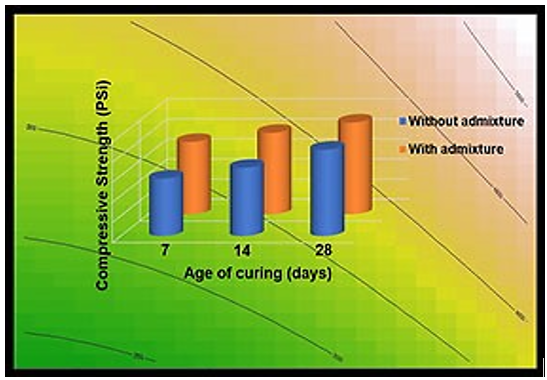
This research investigates the potential of applying Response Surface Methodology (RSM) and Artificial Neural Network (ANN) to optimize the mix design of concrete utilizing locally obtained raw materials. This study aimed to identify the optimal proportion of sand, cement, and coarse aggregate to produce the strongest and most resilient concrete mix. The RSM and ANN framework was applied using the Design of Experiments (DOE) approach, and three-level, three-factor experiments were conducted. The data gathered from laboratory trials was subjected to RSM and ANN. The optimized mix was verified through laboratory tests, achieving a predicted compressive strength 31.48 MPa, using 1016.85 g of cement, a fine/total aggregate ratio of 0.39, and 56 days of curing. The mixture of sand, cement, and coarse aggregate significantly improved strength and durability compared to control specimens, proving both cost-effective and suitable for local materials. The findings of this study can be utilized to create concrete mixes that are more effective and economical. This study also examined the response surface optimization findings through a validation test to demonstrate the efficacy of the RSM and ANN in optimizing the preparation of concrete. The study proses a cost-effective alternative to conventional methods by combining RSM and ANN for locally available materials in Bangladesh and the major limitation of the model is dependent on specific regional instrumental properties, which indicates the need for local calibration.
Graphical Abstract
Keywords: Particle size distribution, setting time, regression coefficient, response surface methodology, concrete mix design, artificial neural network